
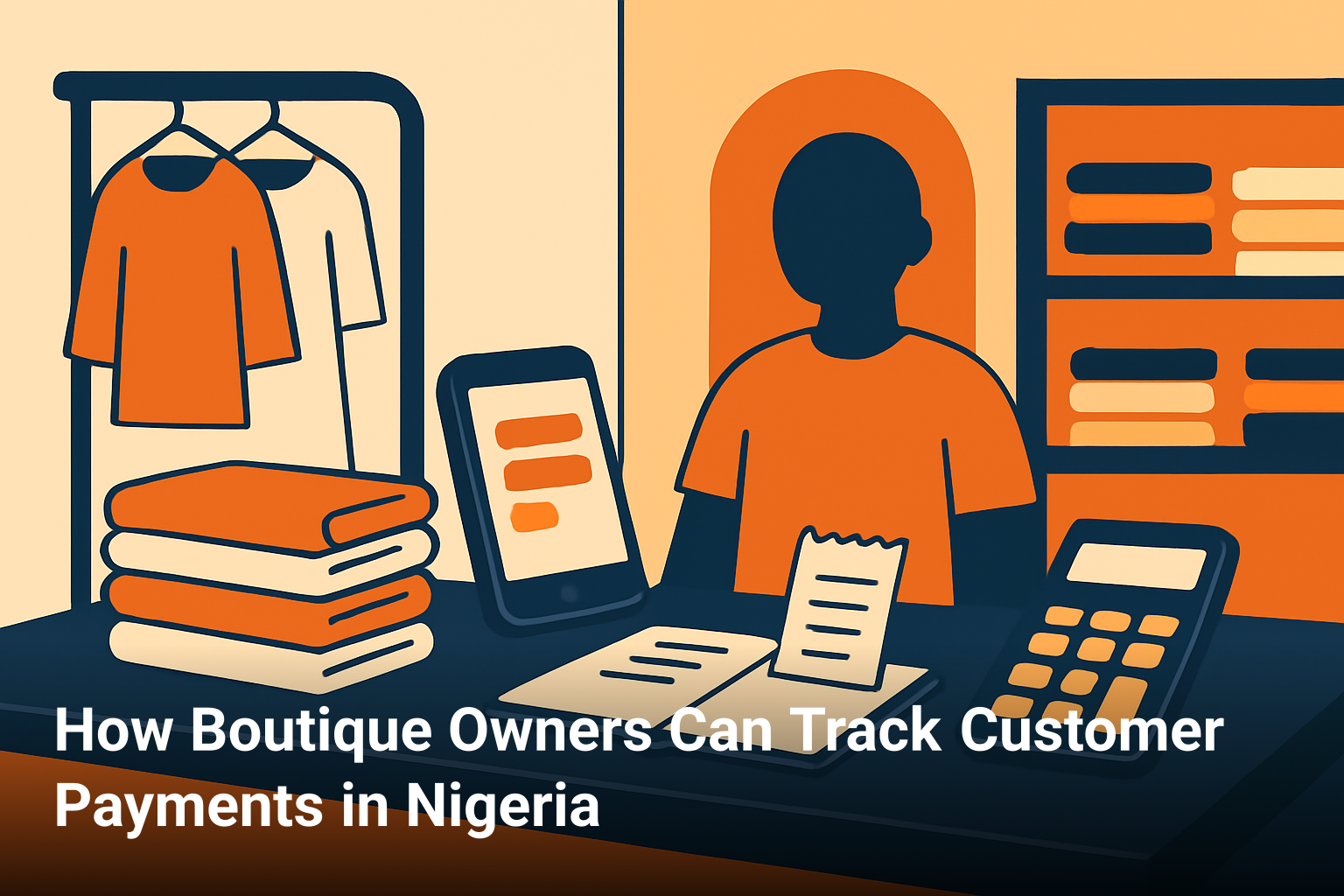
Boutique owners can track customer payments by recording each order, deposit, instalment, balance and due date in one consistent system, then sending a receipt after every payment. NairaTrack helps you create and send receipts, track part payments and debtors, and send reminders from your phone.
What is the simplest way to track boutique customer payments?
The simplest method is to give every customer order a clear record showing the item, total amount, amount paid, balance remaining and expected collection or delivery date. Update that same record whenever the customer pays instead of starting a new note for every instalment.
A paper notebook can work for a very small number of orders, but it becomes difficult when customers pay through transfers, cash and several instalments. A phone-based payment-tracking service such as NairaTrack lets a boutique owner create a receipt, send it by WhatsApp, Telegram, email or SMS, and keep payments, part payments and debtors in one place.
For example, imagine a boutique owner in Abuja selling a two-piece outfit for Naira 90,000. The customer pays Naira 30,000 first, Naira 20,000 later and still owes Naira 40,000. The record should show all three entries rather than only the latest payment.
Which details should every boutique payment record contain?
Every boutique payment record should identify the customer, order, agreed amount, payments received and balance still outstanding. These details make boutique customer payment records easier to check before handing over clothes or accepting another instalment.
Include the customer’s name and preferred contact, a short description such as “black kaftan and trousers”, the full price, date of order, each payment date, payment method and balance. If the customer is paying gradually, also note the next agreed payment date in a way that both of you understand.
Keep the wording specific. “Payment received” is less useful than “Naira 25,000 received on 12 May for blue lace outfit; balance Naira 35,000”. Also record changes to the order, such as a different size or colour, and confirm any new total with the customer before changing the balance.
Do not rely on a bank-transfer screenshot as your only record. Confirm a transfer in your own bank app before releasing the item, then record the payment yourself and send the customer a receipt or payment confirmation.
How should a boutique owner handle deposits and instalments?
A deposit should reduce the customer’s balance, but it should not be treated as full payment unless the complete amount has been received. This is especially important for fashion vendors tracking customer instalments in Nigeria, where an order may remain open for days or weeks.
- Write down the agreed item and total price before collecting money.
- Record the first payment immediately, including its date and amount.
- Calculate the remaining balance by subtracting every confirmed payment from the agreed total.
- Send a receipt or message that states the payment received and the balance left.
- Review open balances regularly and send a polite reminder before the next agreed date.
- Mark the record as paid only after the full amount has been received and recorded.
For example, imagine a customer in Lagos orders a dress for Naira 70,000 and pays Naira 20,000 as a deposit. A useful message is: “Thank you. We have recorded your Naira 20,000 payment for the dress. The balance remaining is Naira 50,000. Please let us know when you are ready for the next payment.”
NairaTrack is useful for this routine because it can track part payments and debtors in one place and send payment reminders. It records the payments that the boutique owner enters; it does not confirm that money has arrived in the bank automatically.
How can boutique owners follow up without upsetting customers?
A good payment reminder is polite, specific and easy to answer. Mention the order, amount already paid, balance remaining and the next step, without accusing the customer or using threatening language.
For example, a boutique owner in Onitsha could send: “Hello, your outfit order has a balance of Naira 30,000 remaining. This is a gentle reminder about the next payment we discussed. Please reply if you would like to confirm a payment date or discuss the order.”
If the customer says there is a problem, record the conversation and agree on the next action in writing. If an order is delayed, the material changes, or the customer requests a different collection date, update the record so the original promise is not mistaken for the current arrangement.
For more wording ideas, see these WhatsApp reminder messages. You can also read about tracking instalment payments if your boutique regularly sells on part payment.
When should a boutique move from a notebook to a phone-based system?
A boutique should consider a phone-based system when payment records are spread across notebooks, chats and bank screenshots, or when it takes too long to work out who still owes money. The change is worthwhile when the owner needs a repeatable record for every order, not just a receipt for one sale.
Start with current unpaid orders rather than trying to rebuild every old sale. Create one record for each open customer, check the balance against available messages and bank records, and ask the customer to confirm any figure that is unclear. Keep old screenshots as supporting information, but use one main record for the current balance.
Before choosing a tool, check that it works on your phone, supports the ways you contact customers and makes part payments easy to record. NairaTrack offers a 7-day free trial, and its plans and pricing are shown in the plans and trial section. For a practical overview, see how NairaTrack works.
If you want to replace scattered payment notes with a clearer routine, you can try NairaTrack and see whether it suits your boutique’s day-to-day records.
Frequently asked questions
How do I record a boutique customer’s part payment?
Record the payment date and amount against the original order, then subtract it from the agreed total to show the remaining balance. Send the customer a confirmation stating both the amount received and the balance left.
Should I keep bank-transfer screenshots as my payment record?
Screenshots can support your notes, but they should not be the only record. Confirm the transfer in your own bank app, record the payment in your main system and send a clear receipt or confirmation.
How often should a boutique owner check outstanding balances?
Check open balances at least once or twice a week, and more often during busy sales periods. A regular review helps you spot missed instalments and send reminders at the agreed time.
Can a boutique use a phone to track customer payments?
Yes. A boutique owner can use a phone-based system to record payments, part payments and outstanding balances, then send receipts or reminders through customer communication channels.