
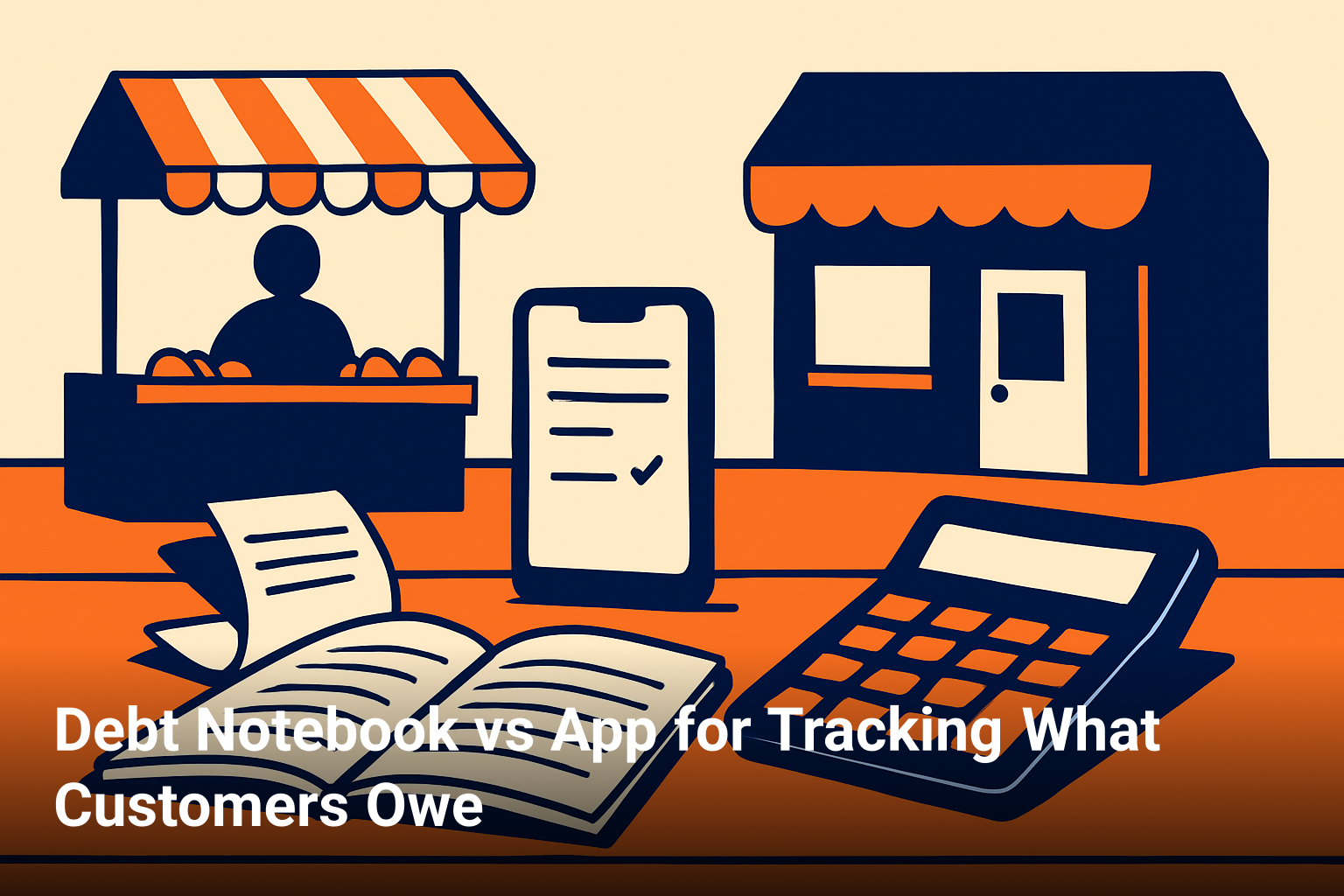
A debt notebook is cheap and familiar, but an app is usually easier to search, update and review when many customers owe different amounts. For a phone-based way to record payments, part payments and debtors, try NairaTrack and keep a notebook as a temporary backup while you change over.
What is the real difference between a debt notebook and an app?
The main difference is how quickly you can find, update and review customer balances. A notebook depends on clear handwriting, careful page organisation and your memory, while an app keeps payment records in one place that you can check on a phone.
For example, imagine a boutique owner in Lagos has 25 customers who bought clothes on part payment. In a notebook, she may need to search several pages for each name and calculate the remaining balance. A digital record can make the same review less tiring, provided she enters every payment correctly.
A notebook still makes sense for a very small operation with only a few credit customers, especially where phone access or data is unreliable. An app becomes more useful when customers pay in instalments, several people sell from the same records, or you regularly need to remind customers about outstanding balances.
Manual debt book vs app for small business: which suits your routine?
The better choice is the system you will update immediately after each sale or payment. A notebook costs little to start and feels private, but pages can be misplaced, damaged by rain or left behind when you go to the market. An app can be searched and updated on a phone, but it still requires a consistent habit and accurate information.
Compare the daily tasks rather than choosing based only on appearance. With a notebook, you write the customer name, date, goods, total amount, payment made and balance. With an app such as NairaTrack, you can keep track of customer payments, part payments and debtors in one place, create branded receipts and send them through WhatsApp, Telegram, email or SMS instead of sending bank-transfer screenshots.
Neither method confirms that money has arrived in your bank account. Before releasing goods, confirm a transfer in your own bank app, then record the payment. A neat system records what your business has been told and checked; it should not treat a customer’s screenshot as proof by itself.
If your main problem is knowing what to write after each transaction, see this guide to keeping payment records for a simple routine that works with paper or a phone.
How to move from a debt notebook to an app without confusion
The safest way to move from a debt notebook to an app is to transfer one customer at a time and check every balance before relying on the new record. Do not try to type a whole notebook from memory or discard the old book immediately.
- Choose a cut-off date, such as the last day of the month, and stop making new entries in the old format after that point.
- Make a list of active debtors only. Include the customer’s name, contact detail, original amount, payments made, balance and any agreed payment date.
- Check each figure against receipts, WhatsApp messages, transfer alerts and your own bank records where available.
- Enter the opening balance for each customer into your chosen app, then mark new payments as soon as they happen.
- Keep the notebook safely for a reasonable period and compare it with the digital record during your first few reviews.
For example, imagine a wholesaler in Onitsha has an old notebook with 12 active buyers. One buyer’s page shows a total of Naira 90,000, two payments of Naira 20,000 and Naira 15,000, and a remaining balance of Naira 55,000. The wholesaler should enter those figures as an opening record, not create a new debt of Naira 90,000.
Which details should every customer debt record contain?
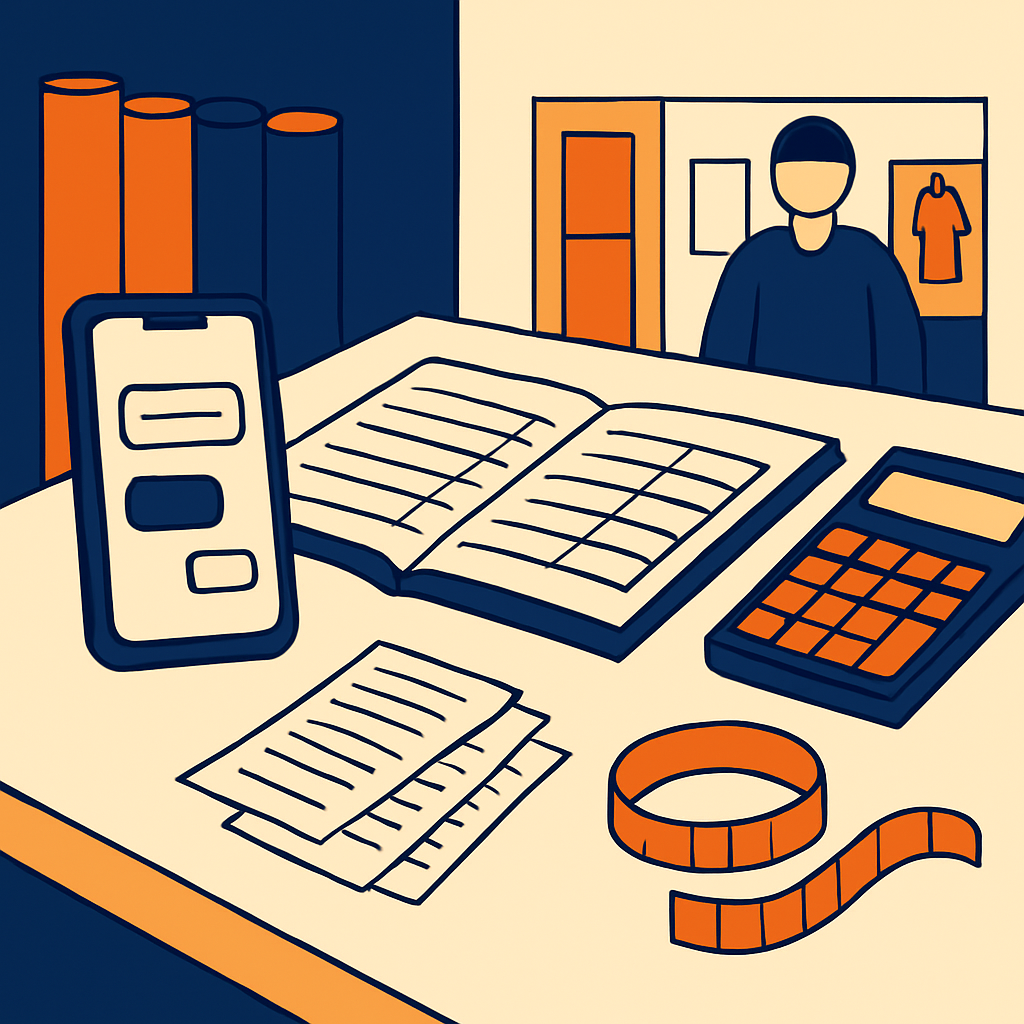
Every customer debt record should show enough detail for you and the customer to understand how the balance was calculated. At minimum, record the customer’s name, contact method, transaction date, items or service, total amount, each payment, remaining balance and the next agreed payment date.
Use one consistent format for names and amounts. If a POS agent in Abuja records one customer as “Aunty Rose” and later as “Rose Boutique”, the same debt may look like two separate records. Ask for a useful contact detail and add a short description such as “two bags and one shoe” rather than relying on memory.
Send a receipt or payment message after each payment, including part payments. A suitable message might say: “Hello, thank you for your payment of Naira 25,000 today. Your total order is Naira 70,000, so the remaining balance is Naira 45,000. We have recorded this payment. Thank you.”
For more wording ideas, read these examples of payment receipt messages. Clear messages reduce arguments because both sides can see the amount recorded and the balance being discussed.
How should you decide whether to keep the notebook or use an app?
Keep the notebook if your customer list is short, transactions are occasional and you can review every page without delay. Consider an app if you spend too much time searching, forget to update balances, send repeated messages to find payment details or manage customers from different places.
A practical test is to review your records at the end of a busy week. Can you quickly answer who owes money, how much each person has paid, which balances are part payments and who needs a polite reminder? If the answer is no, your current method is creating avoidable work.
NairaTrack works on a phone and can track debtors, payments and part payments in one place, with payment reminders available when you need to follow up. The home page explains the basic workflow and includes a 7-day free trial; you can see how NairaTrack works before deciding whether it fits your routine.
Start small rather than moving every old record at once. Try the system with current customers, compare the balances with your notebook, and keep the method that gives you a clearer daily view. If you would like to test NairaTrack, you can try it here without making the change a rushed decision.
Frequently asked questions
Is a debt notebook better than an app for a very small business?
A notebook can be enough when you have only a few customers and update every payment immediately. An app is worth considering when searching pages, calculating balances or following up customers takes too much time.
Can I use both a debt notebook and an app?
Yes. Use the app as the main current record and keep the notebook temporarily while checking transferred balances. Avoid making permanent new entries in both places because the records can quickly disagree.
What should I do if my notebook balance does not match my app?
Pause new changes for that customer and compare the original transaction, each payment and any returned or cancelled order. Check your messages and bank records, then write down the correction and the reason for it.
Will an app make customers pay their debts?
No tool can guarantee that a customer will pay. An app can help you keep clearer records and send polite reminders, while your agreement with the customer and your follow-up still matter.