
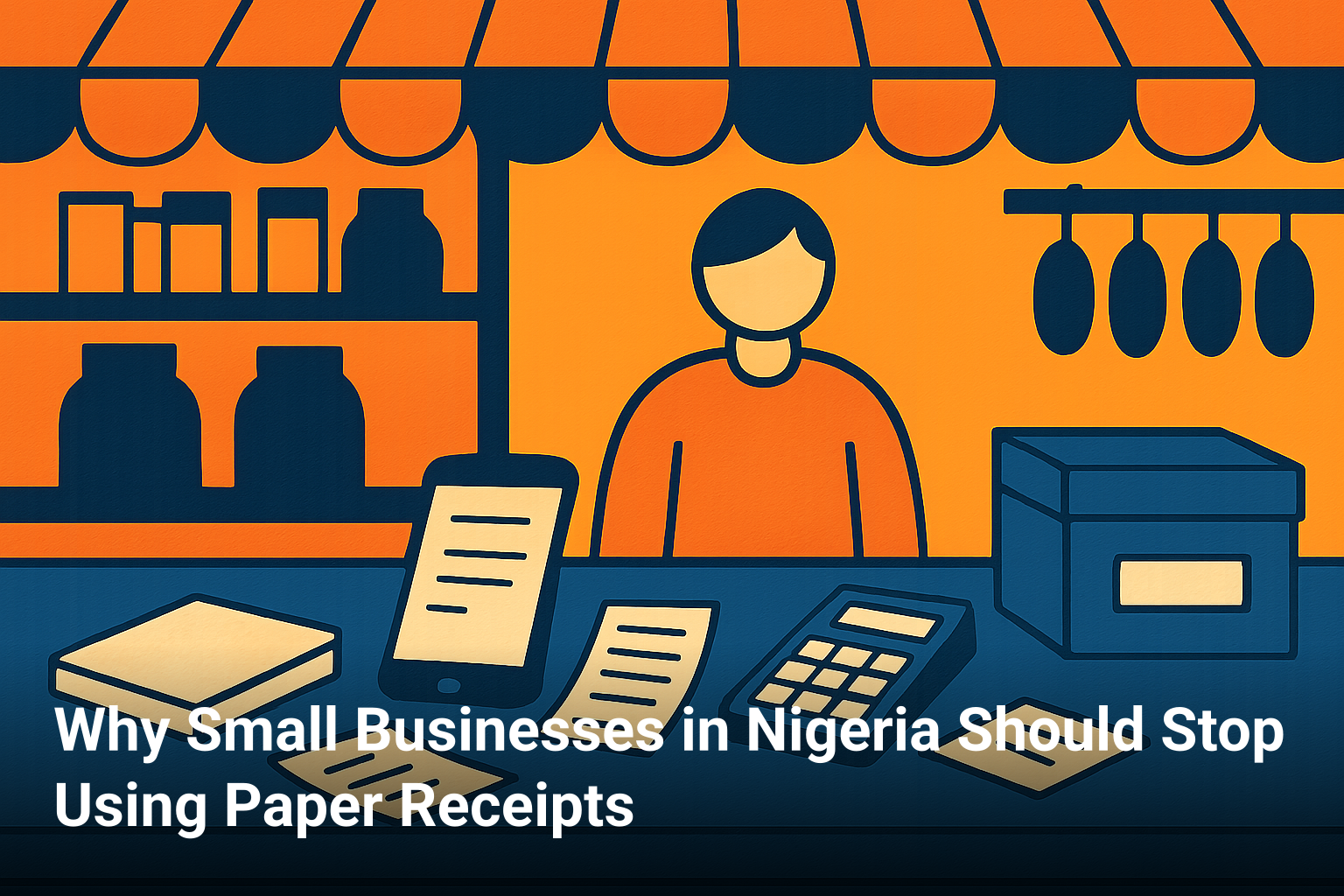
Small businesses in Nigeria should move away from paper receipts because paper can fade, get lost and make part payments or customer debts difficult to follow. A phone-based option such as NairaTrack lets you create receipts, send them digitally and keep payment records in one place.
Why do paper receipts cause problems for small businesses?
Paper receipts create a weak record when a business has many daily transactions. A receipt can be forgotten at a market stall, damaged by rain, or separated from the notebook where the seller records the sale. Later, the business may remember that a customer paid but struggle to confirm the amount, date or balance.
Paper also becomes difficult when customers pay in parts. For example, imagine a tailor in Kano receiving Naira 30,000 towards a Naira 75,000 outfit. If the first receipt is in a drawer and the next payment is written on a loose sheet, the remaining balance can easily become unclear.
The problem is not that every paper receipt is useless. A one-off paper record may be enough for a simple sale. The difficulty comes from relying on paper for repeated sales, customer debts, payment reminders and records that need to be found weeks or months later.
Paper receipt vs digital receipt Nigeria: what changes?
The main difference is how easily the business can find, share and update the payment record. A paper receipt sits in one physical place, while a digital receipt can be sent to the customer through a channel they already use, such as WhatsApp, Telegram, email or SMS.
Digital records are particularly useful for online vendors, POS agents and sellers who serve customers in different locations. For example, imagine a boutique owner in Lagos taking an order through WhatsApp while the customer pays by transfer. Sending a receipt in the same chat gives both sides a clear reference for the order.
The benefits of digital receipts for small business also include less manual searching and a clearer view of part payments and outstanding balances. A digital record still needs accurate information from the seller; it does not replace checking your own bank app before releasing goods or services.
How can a Nigerian business switch from paper receipts to digital receipts?
A small business can switch gradually by choosing a starting point, keeping essential details consistent and using one routine for every customer. There is no need to throw away old notebooks immediately; keep them safely while new transactions are recorded digitally.
- Choose the date you will start using digital receipts for new sales.
- Write down the key details for each transaction: customer name, item or service, total amount, amount paid, balance and payment date.
- Create and send the receipt through the customer’s preferred channel.
- Record every later part payment against the same customer or transaction.
- Review unpaid balances at a regular time, such as before closing for the day.
- Keep paper records stored safely until older customer balances have been settled or checked.
For example, a caterer in Abuja can begin with new event bookings rather than trying to rewrite every older booking. The caterer can send a receipt after the deposit, update the record when another instalment arrives and send a polite reminder when the next payment is due.
What should a digital payment record include?
A useful payment record should show who paid, what the payment was for, how much was received and what remains outstanding. It should also include the date and a simple reference that helps the customer and business identify the transaction.
For example, a wholesaler in Onitsha selling goods on credit could record: “Customer: Shop A; order: household items; total: Naira 90,000; paid today: Naira 40,000; balance: Naira 50,000.” When another payment arrives, the new amount should be added to the same record instead of written on a separate scrap of paper.
Keep messages short and neutral. A reminder could say: “Hello, this is a gentle reminder about the remaining Naira 50,000 on your order. Please let me know when you plan to make the next payment. Thank you.” Clear wording protects the business relationship and makes the purpose of the message easy to understand.
Businesses that want more ideas can also read this guide on daily sales records or learn how to track customer debts without depending on loose paper.
What mistakes should businesses avoid after leaving paper receipts?
The most common mistake is switching to digital receipts without creating a consistent habit. A seller may send a receipt for a full payment but forget to update the record when the customer pays a deposit or settles the balance later. Another mistake is using vague descriptions such as “payment received” instead of identifying the order or service.
Businesses should also avoid treating a receipt as proof that money has reached the bank without checking. Confirm transfers in your own banking app before handing over goods, and record only payments that the business has actually confirmed. Keep customer contact details accurate so reminders reach the right person.
NairaTrack is one practical way to replace paper for ongoing records: it works on a phone, creates branded receipts, sends them by WhatsApp, Telegram, email or SMS, and keeps customer payments, part payments and debtors in one place. If you would like to test that routine, you can try NairaTrack and see whether it fits your business.
Frequently asked questions
Are paper receipts completely useless for Nigerian small businesses?
No. Paper can still be useful for a simple one-off sale or as a temporary backup. The problem is relying on paper alone when the business handles repeat customers, part payments or credit sales.
What is the biggest benefit of moving to digital receipts?
The biggest benefit is easier sharing and retrieval. The customer receives the record digitally, while the business can keep payment details together instead of searching through drawers and notebooks.
Can digital receipts track part payments?
They can if the chosen record-keeping tool supports payment updates. The business should record the original total, each amount received and the remaining balance clearly.
Should I keep my old paper receipts after switching?
Yes, store older paper records safely until the related sales and balances have been checked. Start the digital routine with new transactions and move older information over when it is practical.
Does a digital receipt confirm that a bank transfer arrived?
No. A receipt records the payment information entered by the business. Always confirm the transfer in your own bank app before releasing goods or completing a service.